If you're searching for drain cleaning in Detroit, you're probably standing over a sink that won't empty, a tub that holds water, or a basement floor drain that's started backing up. We handle drain cleaning in Detroit and the surrounding suburbs. Call (313) 474-7729 to talk it through, or describe your problem in the short form and we'll call you back.
Why drains clog in Detroit homes
Detroit has one of the oldest housing stocks of any large American city. The Census Bureau's American Community Survey (2020–2024) puts the median year built for Detroit's 329,393 housing units at 1947, and 78% of them were built before 1960. About 36% predate 1940. Homes from those decades were plumbed with cast-iron and galvanized steel drains inside the house and vitrified clay pipe outside, running to the sewer.
Those materials last a long time, but they age in predictable ways. Cast iron rusts from the inside and builds up a rough scale that catches grease and hair. Galvanized drain lines narrow as they corrode. Clay sewer pipe comes in short sections, and every joint is a place where tree roots can find water. Put those together with mature street trees and decades of kitchen grease, and you get the clogs Detroit plumbers see every week.
Common Detroit drain clogs, by location
| Where | Usual cause | What usually fixes it |
|---|---|---|
| Kitchen sink | Grease and food scale in old galvanized or cast-iron branch lines | Cabling the branch line; sometimes replacing a corroded section |
| Tub and shower | Hair and soap, often in a drum trap on older bathrooms | Clearing the trap and line; replacing an old drum trap if it's failing |
| Basement floor drain | Silt, laundry lint, or a main-line problem showing up at the lowest drain | Cleaning the main from a cleanout; camera inspection if it recurs |
| Toilet | Paper or wipes; sometimes a partial main-line blockage | Augering the toilet; checking the main if several fixtures are slow |
| Laundry standpipe | Lint and detergent sludge | Cleaning the line; adding a lint trap at the discharge |
Drain cleaning in Detroit: what the visit usually involves
A typical drain cleaning call follows the same few steps, whether our plumber is working in a Boston-Edison basement or a post-war bungalow on the east side.
- Find out what's actually clogged. One slow sink is a branch-line problem. Several fixtures slow at once, or water coming up in the floor drain when the washer runs, points to the main line.
- Choose the right access point. Many older Detroit houses have a main cleanout near the front basement wall; some have none that's usable, which affects how the main can be cleaned.
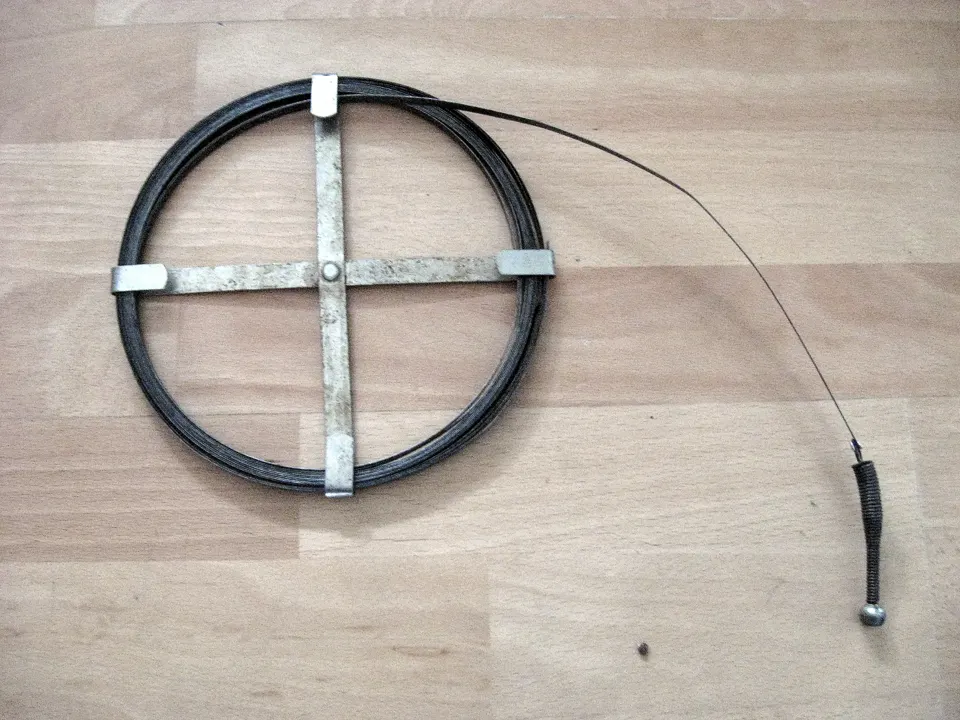
- Clear the line. Smaller lines are usually cabled with a handheld or drum machine. Main lines with roots typically need a larger sectional or drum machine with a cutting head.
- Check the result. Running water through the line confirms it drains. If the clog is a repeat or roots came back on the cutter, a camera inspection shows whether the pipe itself is broken, offset or sagging.
Drain cleaning by itself doesn't usually need a permit. The State of Michigan plumbing code, as summarized on the City of Detroit's plumbing permit FAQ, says no permit is required for clearing stoppages or repairing only the working parts of a faucet or valve, as long as the existing piping and fixtures aren't altered. Replacing a section of drain or sewer pipe is different and does require a permit.
When a clog is really a sewer line problem
Roots that grow back within months, sewage backing up into the basement floor drain, or a gurgling toilet when the tub drains all suggest the problem is in the building sewer, the pipe that runs from your house to the city sewer. In Detroit, the City says the property owner is responsible for that private lateral from the house to where it connects with the city sewer, often in the alley or an easement. That's where a camera inspection pays for itself: it tells you whether regular cleaning will keep things moving or whether a section needs repair. See our sewer line repair in Detroit page for that side of the job.
Basement floor drains and storms
Detroit's sewer system is a combined system, meaning storm water and sewage share the same pipes in most of the city. During heavy rain, the system can surcharge, and the lowest opening in a house, usually the basement floor drain, is where water shows up first. A clean main line helps, but it can't stop a surcharge from the street side. The Detroit Water and Sewerage Department (DWSD) recommends disconnecting downspouts from the sewer and, where needed, installing a backwater valve or sump pump. Our basement flooding guide covers what those options do and what DWSD programs have offered.
Drain cleaning across the Detroit area
We take drain cleaning calls from every Detroit neighborhood and from the suburbs around it. Inner-ring cities with older housing see the same root and cast-iron problems Detroit does: see Hamtramck, Ferndale, Wyandotte and Grosse Pointe Park. Newer suburbs like Westland and Southfield tend to see more kitchen-line and fixture clogs than root intrusion.
What you can do before our plumber arrives
- Stop running water into the clogged fixture, and avoid running the washer or dishwasher if the floor drain is backing up.
- Skip chemical drain openers on old metal pipe. They can sit in a fully blocked line and make the job harder and less safe for whoever opens it next.
- Find your main cleanout if you can, usually a capped pipe near the floor on the wall facing the street or alley, and clear space around it.
- If sewage has come up into the basement, keep kids and pets away and don't use the lowest fixtures until the line is cleared.
Pricing
We don't publish prices. The cost of a drain cleaning job depends on which line is clogged, how our plumber can reach it, the pipe material, and whether roots or a broken pipe are involved. Our plumber gives you a price on site, after finding the cause, so you pay for a fix that lasts rather than a guess. Call (313) 474-7729 to talk it through.
Frequently asked questions
Do I need a permit for drain cleaning in Detroit?
Generally no. According to the City of Detroit's plumbing permit FAQ, clearing stoppages doesn't need a permit as long as existing piping and fixtures aren't altered. Replacing pipe does.
Why does my Detroit basement floor drain back up when it rains?
Most of Detroit is on a combined sewer, so heavy rain can surcharge the system. The floor drain is usually the lowest opening in the house. A clean main helps; a backwater valve is the device designed to stop water coming back from the street.
How do I know if it's the main line and not just one drain?
If several fixtures are slow at once, or water comes up in the floor drain or tub when the washer or toilet runs, the main line is the likely culprit.
Should I use chemical drain cleaner on old pipes?
It's better not to on old cast-iron or galvanized lines. If it doesn't clear the clog, it sits in the pipe and makes the repair more hazardous.
Who owns the sewer pipe from my house to the street in Detroit?
The City of Detroit says the property owner is responsible for the private sewer lateral from the house to its connection with the city sewer. DWSD maintains the public system.
Can you clean my drain in the suburbs too?
Yes. We take calls from Detroit and the suburbs listed on our service area pages, from Dearborn and the downriver cities to the Grosse Pointes, south Macomb and south Oakland.